Philadelphia’s new ‘Breathe Philly’ network tracks air quality across the city
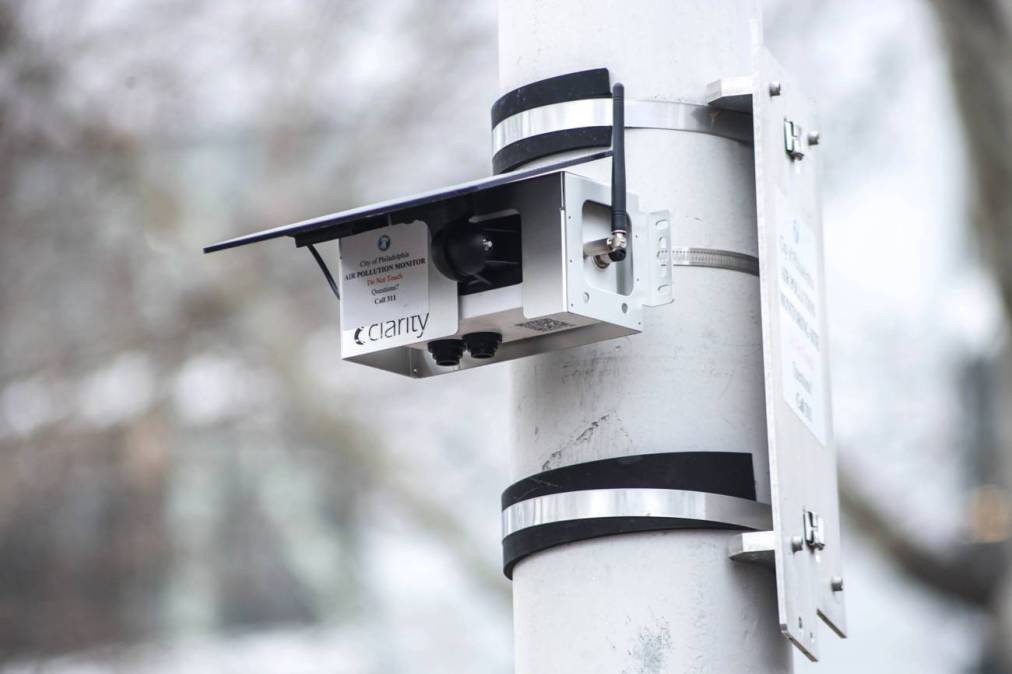
Philadelphia on Wednesday launched a network of 76 ground-level sensors that will deliver real-time air quality data to residents across the city.
The sensors, part of the “Breathe Philly” network, measure fine particulate matter and nitrogen dioxide, two common pollutants linked to asthma, respiratory illness and cardiovascular disease. Residents can access neighborhood-level data through an online dashboard, view trends over time and sign up for alerts when air quality worsens.
Poor air quality causes 100,000 premature deaths in the United States annually and costs roughly $150 billion in health-related damages, according to estimates by the Environmental Protection Agency.
“Clean air is fundamental to public health and our vision for a cleaner and greener Philadelphia,” Mayor Cherelle Parker said in a press release. “Breathe Philly ensures no matter your zip code, you have access to real-time information about the air you and your family are breathing.”
She added that every city resident lives within 1.5 miles of one of the network’s air quality monitors.
A 2023 report from Philadelphia Air Management Services, part of the city’s public health agency, showed that many air pollutants, though not ozone, were decreasing in the city.
The Philadelphia Department of Public Health already operated an ambient air monitoring network, using ten permanent stations to track air quality. Despite collecting critical information, said James Garrow, the city’s deputy health commissioner, those stations do not offer real-time data and some neighborhoods are out of range.
He said city’s air quality index is healthy on most days, but weather, wildfire smoke and traffic patterns can cause sudden changes, making it important to collect hyperlocal data.
“We’ve seen this in the past where we’ll have a fire or an explosion in the city and the nearest air monitor is upwind, so potentially people could have been exposed to things without ever knowing, and we would never know that it was there,” Garrow said in an interview.
He said that the new sensor system has already shown its effectiveness, detecting an orange alert due to a junkyard fire in the city’s Gray’s Ferry neighborhood on Wednesday.
Garrow said that the real-time data captured by the sensors will also allow more timely emergency responses and public health warnings, by dispatching the department’s mobile van, outfitted with toxic-air monitoring equipment, to the impacted area.
“The idea is, if something goes red unexpectedly or bad, and that’s not the same as any of the other monitors in the area, that triggers us to dispatch that, and the mobile monitor truck will drive around the neighborhood and collect data and be able to help us issue warnings to the public if needed,” he explained.
Garrow said the city’s health department plans to expand the air monitoring network, adding additional sensors to measure the ozone layer, as soon as this spring, to help identify long-term pollution trends across the city and guide future air-quality regulations.
“There are so many variations day to day, but as we figure out, over seasons and over years,” he said, “we’ll be able to see if a particular monitor seems to be a couple of degrees higher than the rest of them and investigate if there’s anything causing worse levels of air quality.”